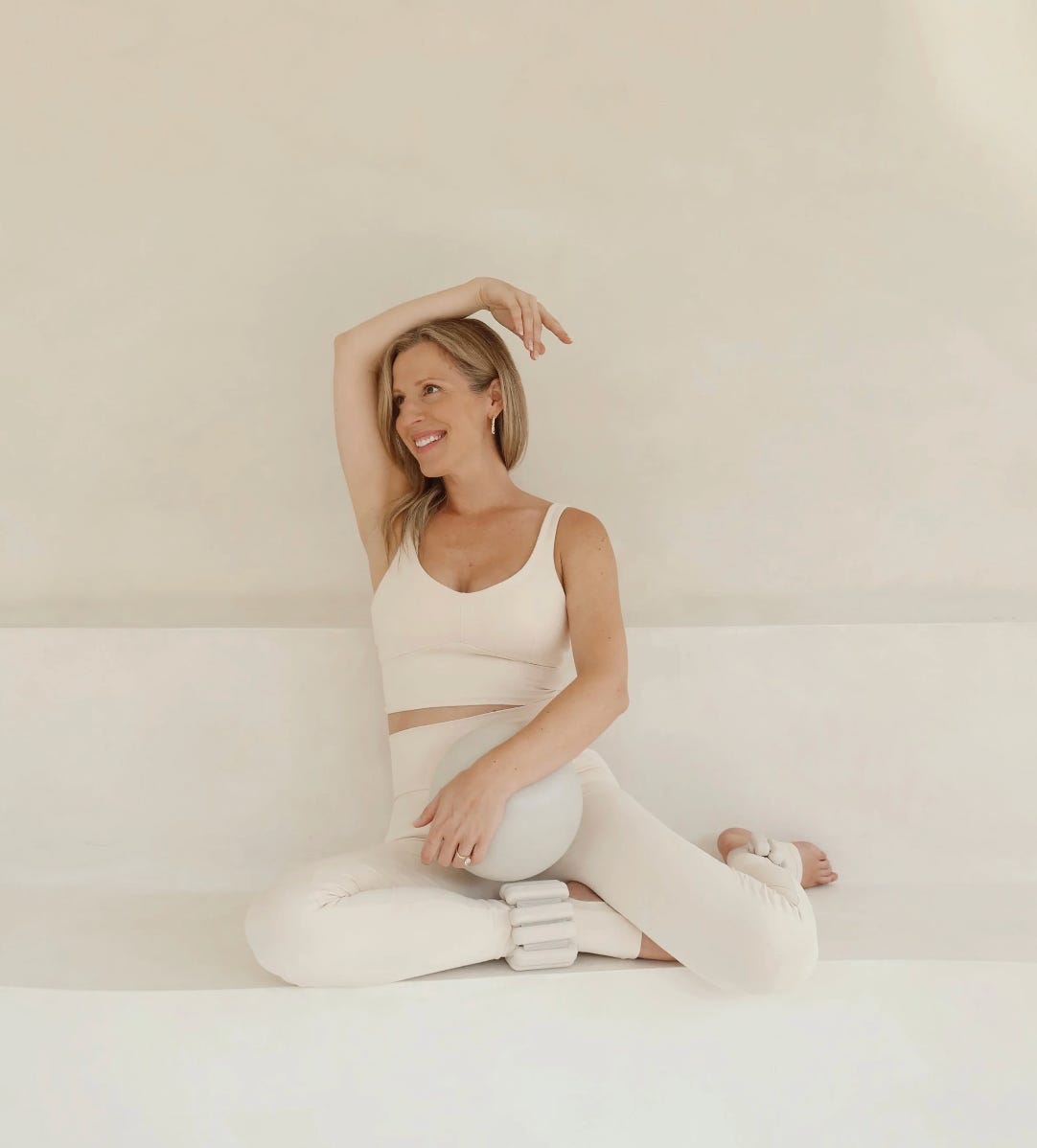
Long before she became a mom, Lily Collins-Sak built her career around understanding the body.
As the founder of The Daily Pilates, a fast-growing studio and wellness brand grounded in thoughtful movement, Lily spent years studying how bodies strengthen, recover, and adapt. With a background in Kinesiology and Exercise Science, she developed a philosophy of fitness that prioritizes sustainability over intensity—helping women move in ways that feel supportive, intelligent and deeply connected to how the body actually functions.
But pregnancy has a way of humbling even the most knowledgeable among us.
For Lily, entering motherhood meant stepping into an experience she had spent years guiding others through professionally—only this time, it was her own body doing the changing. The subtle shifts in breath, the deep core engagement she had coached clients to find, the physical and emotional recalibrations of postpartum recovery suddenly felt less theoretical and far more personal.
What she discovered was something many women recognize the moment they become mothers: the body is far wiser than we often give it credit for.
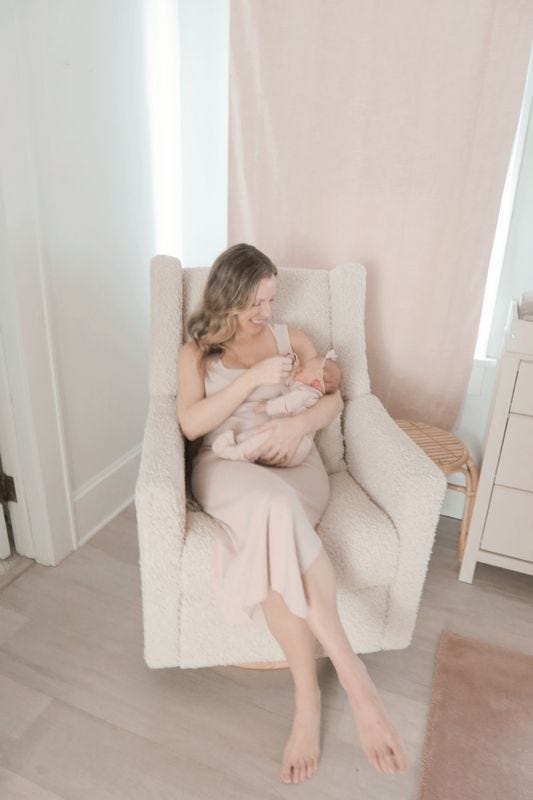
In the early days of life with her newborn daughter, Lily finds herself navigating a season that feels both familiar and entirely new. Her background in movement science gives her a framework for understanding what her body is doing, but lived experience has introduced a different kind of knowledge—one rooted in intuition, patience, and a growing respect for the nonlinear nature of healing.
At the same time, motherhood has begun to reshape how she approaches the work she’s built.
Where her days once started in full founder mode—mentally organizing tasks, planning studio operations, thinking several steps ahead—her mornings now begin somewhere much quieter. With a baby in her arms and a new rhythm unfolding at home, Lily describes a shift toward presence: a desire to move through her days with more intention about where her energy goes and what truly matters in this season of life.
That perspective is beginning to influence the way she thinks about wellness, too.
For someone who has long championed balanced, sustainable fitness, becoming a mother has only deepened the belief that movement should support life—not compete with it. Strength now looks a little different than it once did. Slower, perhaps. More intuitive. Less about pushing through and more about learning when to pause, reset, and care for the body that has just done something extraordinary.
In this conversation for The Motherhood Identity Series, Lily reflects on what it’s been like to move from teaching women about their bodies to experiencing one of the most profound physical transformations firsthand. She talks about the surprising lessons pregnancy and postpartum have offered, how motherhood is quietly reshaping her relationship with ambition and work, and why listening to your body may be the most powerful skill a woman can develop.
Because sometimes the most meaningful understanding doesn’t come from studying the body.
It comes from living inside it while it changes.
You’ve spent your career understanding the body through kinesiology and movement science. How did experiencing pregnancy and postpartum change the way you understand your own body?
I’ve spent decades deepening my understanding of exercise science and studying prenatal/postpartum movement, but experiencing pregnancy firsthand has given me a whole new layer of respect for the body’s intelligence and adaptability.
What surprised me most was how it felt to experience the internal sensations I’ve been cueing clients to connect with for years. Feeling the change in deep core engagement, the shifts in breath, the changes in stability, it was actually really fun to feel what I’ve always asked others to tune into during their journeys. There’s something incredibly humbling and affirming about realizing, “Oh, THIS is what it feels like.”
Postpartum has added another layer of growth. It’s reminded me that healing isn’t linear and that even with knowledge and preparation, every body responds differently. Did becoming a mother change how you approached wellness personally?
Absolutely. Sleep became sacred. I became even more intentional about nourishing myself because I understood that my energy affected everyone in my home and set an example for my children.
It also deepened my philosophy that skin is an outer reflection of inner health. When you’re exhausted or depleted, your skin reflects it. Motherhood reinforced for me that wellness is foundational. Taking care of myself wasn’t selfish. It was essential.
Was there a moment after becoming a mom when you realized motherhood had shifted your identity—not just your routine? What did that moment look like?
I’ve often referred to my businesses as my babies, nurturing, growing, and giving them all the energy they needed to succeed. I think that mindset and experience has prepared me for the responsibility and unknowns of having a child. Motherhood has started to reshape me though and how I now approach each day. I used to wake up immediately in to-do list checkoff business mode, mentally organizing the day ahead. Now, my first instinct is to think about my daughter and the love I just want to pour into her! I am feeling more present and intentional with how I plan to spend my energy moving forward.
Before having a baby, what did you imagine motherhood would feel like—and what surprised you most once you were actually in it?
I’ve always been someone who prepares, plans, and perfects so I assumed I’d approach motherhood the same way. Now that I am experiencing it I’m surprised to let go of this approach and just slow down and let intuition lead, let her guide us. She shows me what she needs. She teaches me her rhythms. I’m seeing that love, consistency and attunement matter more than doing everything “right.”
Your work centers on intentional movement and balanced wellness. How has your definition of “strength” changed since becoming a mother?
Honestly, I don’t know that my definition of strength has changed but it has definitely deepened.
I’ve always believed strength is about a healthy amount of discipline, balance, patience, and consistently. Motherhood has really expanded this for me. Postpartum hormones, bringing a new life into the world, and adjusting to an entirely new rhythm tested me emotionally at times in ways I could never have trained for.
I’ve learned that strength isn’t just about pushing through. It’s also about finding outlets like meditation or pilates to help regulate when emotions feel intense, taking breaks to rest without guilt, and choosing presence as much as possible. It’s a quieter, more grounded kind of power and in many ways, it’s stronger than I ever understood before.
As someone trained in exercise science, did postpartum recovery feel empowering because of your knowledge—or humbling in unexpected ways?
Both! My background and experience with others gave me the confidence and reminder to approach recovery intentionally, really slowing down in the first few weeks, listening to my body, and using breath and gentle reformer work to heal safely. At the same time, I was extremely humbled by the hormonal shifts, physical discomfort and reality that healing can’t be rushed. My family and friends really helped me in understanding the normalcy of what I was experiencing, it’s something no amount of training can truly prepare you for!
Have your expectations around fitness, productivity or physical progress softened or shifted since entering this season of life?
Absolutely, I think there’s more of an emphasis now on working out in a way that supports me feeling my best each day. It’s less about the quantity of workouts in a week or how long I spend exercising, and more more about moving in a way that supports what I need. I’m prioritizing more meditative breath work to help balance my responsibilities, mobility to keep me moving efficiently, and mindful strength training that helps me stay strong for my every day tasks like picking up baby girl! This season of life has made me prioritize caring for my body in a sustainable, nourishing way that I enjoy.
You founded The Daily Pilates from a place of thoughtful, sustainable movement. How has becoming a new mom influenced the way you want women to experience fitness through your brand?
My goal since opening TDP has been for women to look forward to fitness and leave our doors feeling better, both physically and mentally, knowing that taking care of themselves first allows them to show up stronger for others. Becoming a new mom has deepened that understanding. I now truly feel how important it is, but I also see how intimidating it can feel to start something new or return to exercise when your body feels different. Every new mom should feel safe, supported, and cared for and have a place to reconnect with her body and enjoy movement without pressure. I hope our studios can be that outlet, where wellness feels accessible, empowering, and nurturing at every stage, for every one.
Do you feel your work now carries a different emotional weight or purpose compared to before motherhood?
For sure. My mom ran her business from our home growing up and I witnessed her commitment and drive that helped give me the confidence to pursue my own dreams. Whatever my daughter decides to do, I want to show her that it can be done and inspire her in the same way.
How do you balance showing up as a founder and instructor while also allowing yourself to be in a slower, more tender postpartum chapter?
I’m still on maternity leave, which has been so special. I’ve paused teaching for now, but I still check in with the franchise each week, usually during her little 10:30–noon nap window.
Sometimes I’ll pop her in the baby carrier so she’s right there with me while I get a few things done. It has me moving slower, focusing on what truly matters, and soaking up this season. It feels really sweet to be able to stay connected to my work while keeping her close at the same time.
Many mothers talk about feeling both more themselves and completely new at the same time. Has that duality shown up for you?
She has me tapping back into my softer, more playful self. When I first started TDP, I got a small play button tattoo on my wrist to remind myself to “press play” and have a little fun even when work gets challenging. I think she does this for me as well!
What parts of your pre-motherhood identity have stayed constant—and what parts feel like they’re still evolving? The steady, driven side of me has definitely stayed constant. I’ve always been organized, structured, and intentional and that’s carried into how I care for her. I love creating a rhythm to our days and making sure she feels safe and supported. That foundation of discipline and consistency still feels very “me.”
What’s evolving is how I handle control and problem-solving. I’m used to fixing things quickly and efficiently, but motherhood is teaching me to slow down, to sit in the unknown, and to trust more. I’m also becoming softer with myself, more patient, more present, less focused on doing everything perfectly.
Has motherhood changed your relationship with ambition or success? If so, how?
Motherhood has made ambition feel more balanced. I still have big goals and dreams for TDP, but now more than ever it’s, How can I go after this without running myself into the ground? I want to build amazing things and still have the energy to be fully with her.
She honestly makes me want to achieve even more but in a way that feels sustainable and joyful. It’s not just about success anymore. It’s about creating a life where I can work with my team to work towards our goals while being the kind of mom I’m proud of at the same time.
What’s a part of early motherhood that you wish more women talked about openly?
How labor and hormones affect the body physically and emotionally and the best ways to support the healing process. We spend so much time preparing for the baby, what to expect, how to care for them… but not nearly enough time preparing for how to care for ourselves. I think more conversation around how to truly support the healing process would set women up to feel stronger and more confident in those early weeks.
I’d also love to see hospitals focus on postpartum support in a way that feels more nurturing, elevated, and beautiful and less clinical. Spa-like rooms catering to postpartum that has everything you need, from products to services, all in one calm, beautiful space would be magical for a new mom!
In moments when you feel disconnected from yourself, what helps you come back home to who you are?
I love coming back home to the simple, cozy things. A long, warm bath, a good face mask, a lemon ginger tea, just letting myself relax. Cuddling on the couch with my family, watching the little moments unfold. Turning on a good playlist, lighting a fire, whatever helps me disconnect and just let the world slow down.
What kind of example do you hope your child grows up seeing in you—as a woman, not just as a mother?
I hope she sees a woman who goes after her dreams with courage and curiosity, who works hard but also knows how to rest and take care of herself. Someone who leads with kindness, makes mistakes, learns from them, and keeps showing up anyway. I want her to see that it’s possible to be ambitious, joyful, and compassionate all at once and that being your genuine self is the most powerful example of all.
If you could speak to yourself during the early newborn days, what would you want her to know?
I am still in the early newborn days so I am constantly reminding myself to soak up these tiny moments and let her know and feel loved and cared for as much as I can!